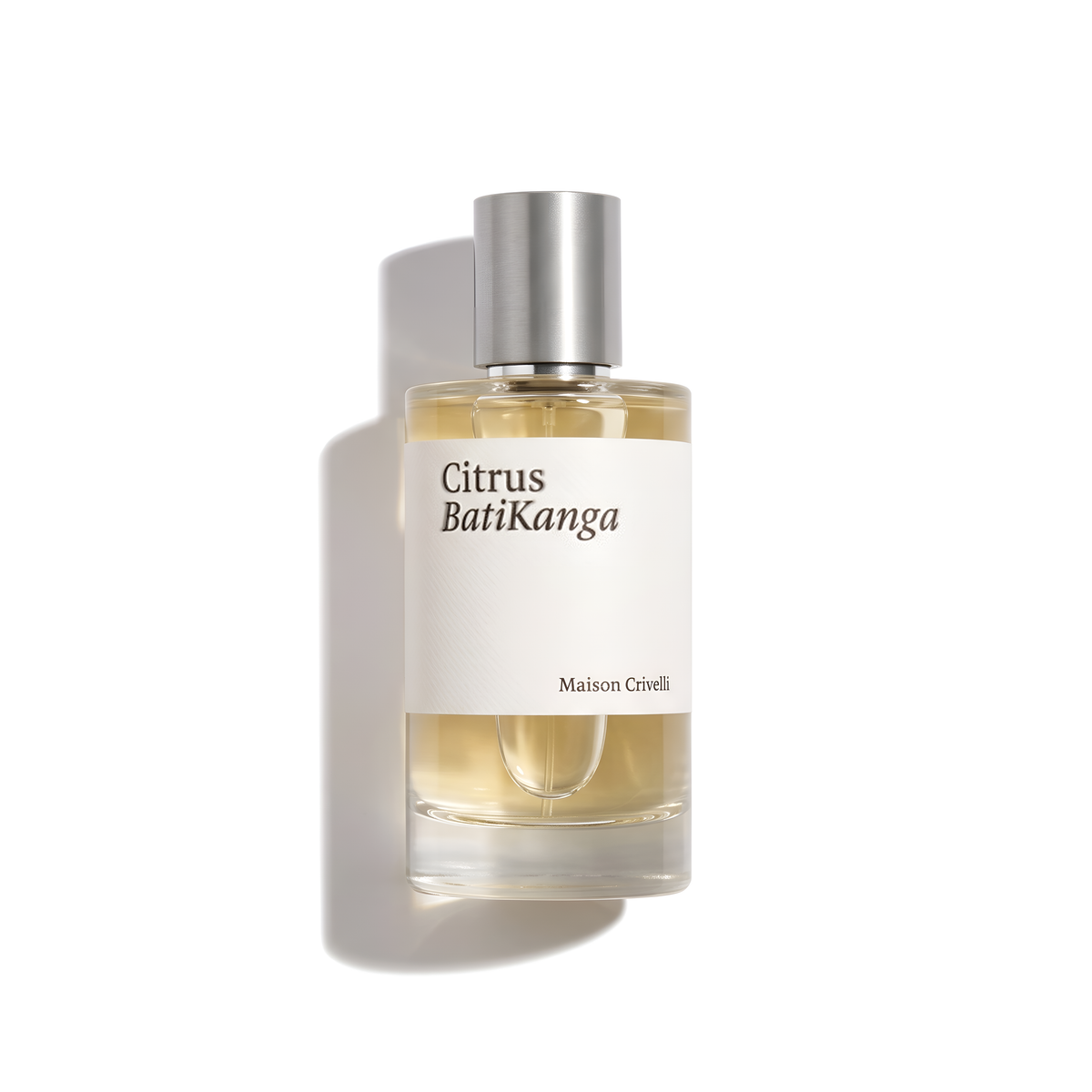
Few citrus fragrances have the nerve to run hot. Maison Crivelli Citrus Batikanga Eau de Parfum, released in 2019 and composed by Bertrand Duchaufour, is built on exactly that tension: bright bergamot and pomelo colliding with chili pepper, the whole thing anchored by smoky vetiver and bitter myrrh. Aromatica carries the Citrus Batikanga decant in Bangladesh in all available sizes, so you can experience the full arc of this fragrance.
Fragrance Notes
Top: Bergamot, Cardamom
Heart: Chili Pepper, Pomelo, Rhubarb
Base: Vetiver, Myrrh, Fenugreek
Full note breakdown on Fragrantica.
The Scent
Bergamot opens with real brightness, not the kind that disappears in ten minutes. Cardamom arrives immediately behind it, adding a green, slightly minty edge rather than the typical warm-spice sweetness. Within the first few minutes you can already tell this is going somewhere unusual. Pomelo layers in, bringing a slightly bitter, pulpy quality that thickens the citrus accord considerably. Then the rhubarb arrives, tart and almost vegetal, pushing the fragrance into genuinely unexpected territory. It smells like the squeezed rind of something, not the fruit itself. The combination of cardamom and rhubarb together is what makes the opening feel composed rather than arbitrary, two ingredients that each carry a raw, slightly medicinal quality on their own but read as coherent alongside bergamot.
The chili pepper is the central move. It does not read as food or as a blast of dry heat; it functions more like a shift in temperature across the bergamot, moving it from luminous and refreshing toward something blazing and slightly feverish. It can read heady on one skin, a citrus that finally has weight and danger, or animalic and polarizing on another, leaning slightly macerated rather than clean. Both readings come from the same moment in the fragrance's development. The chili does not dominate or obscure the citrus; it transforms it, and whether that transformation reads as exciting or unsettling depends partly on skin chemistry and partly on expectation. The rhubarb and pomelo continue to push and pull against the heat, keeping the heart phase active and restless rather than settling into a single mood.
The drydown is where Citrus Batikanga earns its complexity. Vetiver grounds everything with a smoky, earthy quality that counterbalances the volatile citrus top. As the vetiver establishes itself, the bergamot and pomelo recede gradually rather than vanishing, leaving behind a faint luminous trace that the smokiness keeps from disappearing entirely. Fenugreek is the surprise: a faint nuttiness between hazelnut and dried maple, which softens the composition considerably and bridges the gap between the fiery heart and the quieter base. Myrrh closes the fragrance with a resinous, meditative quality that pulls the whole structure toward something darker and more contemplative than the opener suggested. The base is richer and darker than the opening suggests, and the contrast between that initial citrus brightness and the deep resinous drydown is what makes this fragrance memorable rather than merely interesting. By the time the base is fully settled, you are wearing something that shares almost no character with a conventional citrus, which is precisely the point.
When to Wear
The chili and dark base make it better suited to cool-weather evenings, autumn dinners, or indoor occasions where its warmth can settle rather than compete with heat. It also works in a professional setting on a cold morning, when the initial citrus reads as sharp and composed before the spice develops.
Who Is It For
Made for the person who finds conventional citrus colognes forgettable and wants something in that family that actually has edge. If you wear fragrances from the Spices collection and have been curious whether citrus can hold its own in that territory, this answers the question.
If you enjoy Oud Maracuja, another Maison Crivelli composition built on unexpected ingredient contrasts, it sits in a similar creative space and is worth comparing. Browse the full Maison Crivelli collection at Aromatica. For a softer, iris-led detour from the same house, Maison Crivelli Iris Malikhan is worth a look too.
Available as an authentic decant in Bangladesh at Aromatica in 3ml, 5ml, and 9ml.